
By Batoul Yassmin, MPH, Public Health Prepared
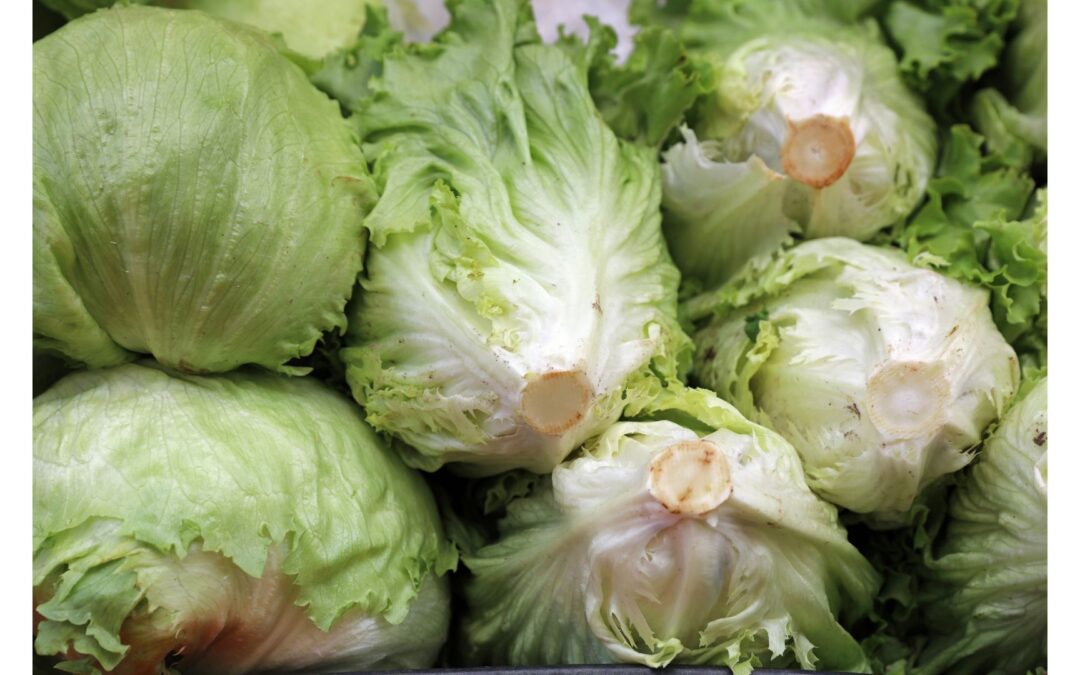
Have you ever looked at your bowl of lettuce and wondered how something so fresh and harmless-looking could make you sick? This can happen when fresh produce is contaminated with Cyclospora cayetanesis, a microscopic parasite that can cause a diarrheal illness known as cyclosporiasis. In 2026, Cyclospora was linked to a multistate outbreak affecting 19 U.S. states, with 9,481 cases reported by the Centers for Disease Control and Prevention (CDC) as of the U.S. Food & Drug Administration ( FDA)’s August 13, 2026, report.
According to a report published by the FDA on July 16, 2026, the FDA and CDC investigated a Cyclosporiasis outbreak after thousands of cases were detected in five states: Indiana, Kentucky, Michigan, Ohio, and West Virginia.. To identify a potential source of the outbreak, food exposure was analyzed for 190 affected individuals, who were further investigated and interviewed about where and what they had eaten before becoming ill. The investigation revealed that 90% of those interviewed were exposed to food at Taco Bell restaurants, and all consumed iceberg lettuce. The traceback work done by the CDC linked the source of lettuce to a common supplier, Taylor Farms.
Mode of Transmission
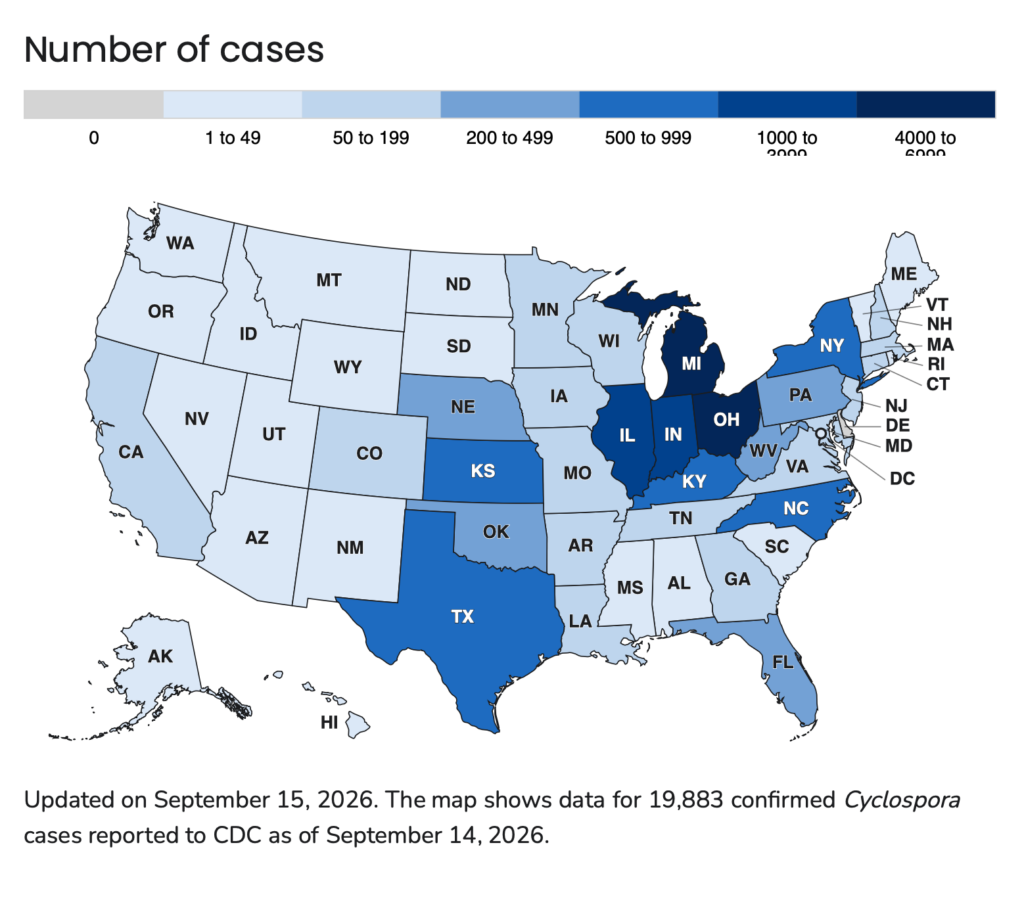
The parasite is transmitted through the consumption of raw food, usually raw produce, or water containing the parasite. Cyclosporiasis is a gastrointestinal illness that causes severe sickness in people but is usually non-life-threatening. The parasite is most often transmitted to food through contaminated water systems infected with human feces. The duration between getting the infection and starting to experience symptoms of the disease is typically one week, but can range from 2 days to 2 weeks before symptoms manifest. As of August 31, 2026, 18,445 Cyclosporiasis cases were reported by the CDC and distributed in states as shown in the map below.
Symptoms
According to the FDA, infection with the Cyclospora parasite causes severe diarrhea, which is the most common symptom. People with cyclosporiosis can also experience loss of appetite, weight loss, bloating, nausea, and fatigue. Other less common symptoms could be vomiting, body aches, and fever. When it stays untreated, the infection can persist for weeks and may disappear but return again. In some special groups, such as immunocompromised individuals, the infection might cause severe dehydration and other complications requiring extra medical care.
Detection
In the US, the Cyclosporiasis cases usually rise in spring and summer of each year, from May 1 through August 31. The CDC routinely collects data on Cyclosporiasis for early detection of outbreaks using molecular fingerprinting to identify cases related to an outbreak. Cases are first reported by clinicians and laboratories to local and state health departments, which are then reported to the CDC.
Prevention and Treatment
While some infections go on their own, it is recommended to treat cyclosporiasis with antibiotics such as trimethoprim and sulfamethoxazole. Since Cyclospora causes severe diarrhea, providers might also recommend taking hydration supplements. According to Cynthia Louise Sears, an expert in foodborne and intestinal infections, several practices are recommended to protect oneself from catching the infection, such as washing produce before consumption and cooking the products instead of eating them raw, which can help kill the pathogen. It is also recommended to refrain from drinking water from streams and springs as they are untreated, and to thoroughly wash hands after toilet use and changing diapers.
Source Traceback
It is an interesting question how public health officials were able to connect thousands of cases of illness across the whole country to something as ordinary as lettuce. This is because the CDC uses multiple types of data to detect the source of an outbreak, such as patient interviews, food tracebacks, and laboratory testing. Since whole-genome sequencing is not available for Cyclospora, like other bacteria such as Salmonella, the CDC groups related cases by performing genetically specific marker testing on stool samples from patients infected with the bacteria.
Current Status
During the summer of 2026, the FDA investigated five Cyclospora outbreaks of which only one was traced to a specific food source: iceberg lettuce. The source for the other four outbreaks is still unidentified. As of September 11, 2026, the CDC announced the end of the outbreak that was traced back to iceberg lettuce from Taylor Farms de Mexico. It was confirmed that these products are no longer in stores; they were recalled, and their best-by dates have passed. The CDC also declared that there won’t be updates after this date, as cases take up to six weeks after infection to be reported to the CDC, which could mean cases identified during the outbreak would still be reported if identified.